By Bridget Dandaraw-Seritt
Earlier this month, the Colorado Department of Healthcare Policy & Financing (HCPF) released more information on the upcoming Medicaid work requirements that start January 1, 2027. They estimate these new reporting requirements will impact 377,000 Coloradans, with about 140,000 of those currently unemployed who potentially have exemptions. One of the biggest changes was to the definition of medical frailty, making it harder for a person with a chronic illness to become exempt from meeting the 80 hour a month engagement requirement.
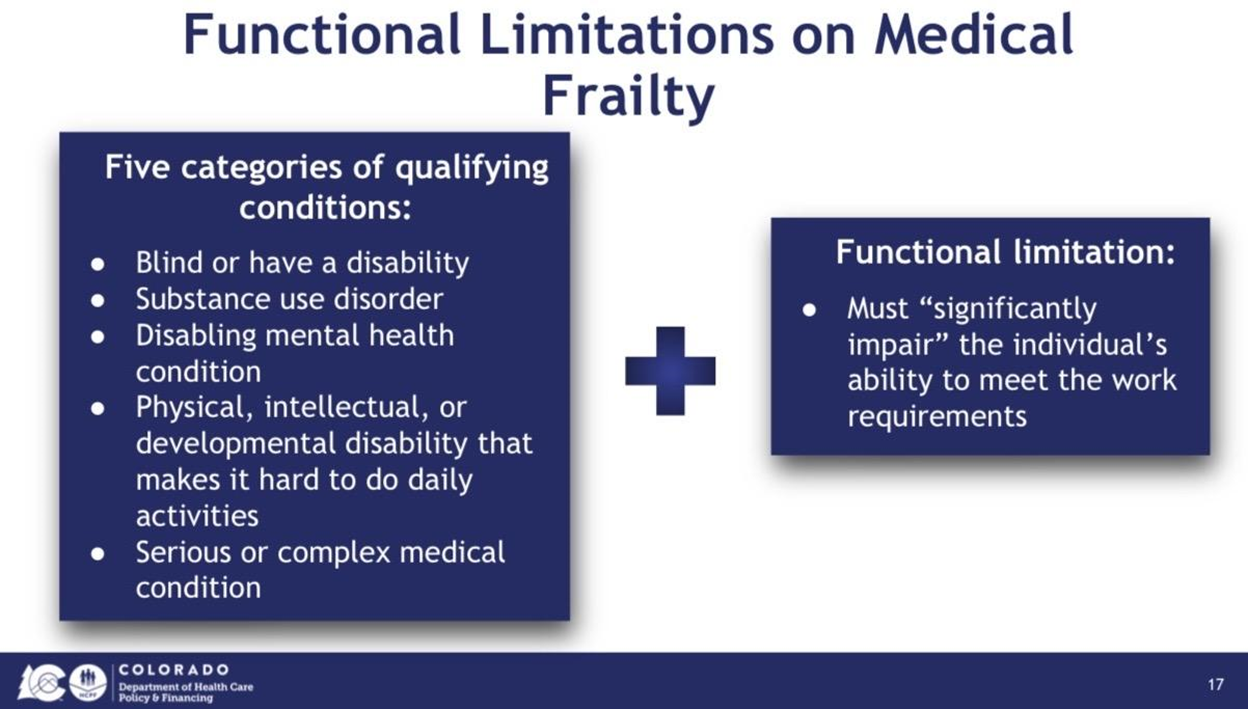
For those planning to apply for the medically frail exemption, you’ll need more than just your diagnosis. Conditions alone no longer qualify someone as medically frail. You will also have to show that your condition impacts your ability to work, volunteer, or go to school. To meet the first part of the definition, you’ll need to satisfy one of these criteria:
- Be blind or have a disability
- Have a substance use disorder or be in recovery less than 5 years
- Exhibit a physical, intellectual, or developmental disability that impacts daily activities like bathing, toileting, mobility, etc.
- Have a serious or complex medical condition
Having lupus can be considered a serious medical condition, but a diagnosis alone won’t qualify you for the exemption. In addition, you will have to show that your lupus is moderate to severe and impacts your ability to complete the engagement requirements. HCPF will first try to obtain that documentation through claims and data sharing with other state systems, but there is a limit to what that data shows. You may still need to provide extra documentation as often as every 6 months.
Colorado SNAP and TANF share the same data systems with Medicaid. If you use those programs and have satisfied the work requirements, then you’ve automatically met the ones for Medicaid. That does not work in reverse though since the work requirements for both SNAP and TANF are stricter and more involved. In addition, your current Medicaid claims data could provide HCPF with enough documentation to show impairment. However, there are bound to be people whose disabilities aren’t within the scope of claims data.
HCPF can take self attestation, or self reporting, for the first year. To help identify people that could have a medically frail exemption, there are new screening questions being added to the application and renewals. In 2027, all new applicants and renewals will be screened for this carve out. Starting January 2028, you will need to provide documentation. Right now, exactly what documentation is unknown, but they are considering using an outside vendor to assess your ability to complete the 80 hour monthly engagement. We do know that the documentation has to be recent, verifiable, and auditable.
If you think the upcoming community engagement requirements apply to you, there are some things you can do to prepare.
- Make sure your medical records document how your ability to function is impaired. You can have the doctor note how often you experience things like chronic pain, fatigue, cognitive impairment/brain fog, mobility challenges, etc. The records need to also show how these symptoms keep you from doing daily activities like cooking, bathing, dressing, leaving the house, and being able to do reliable work.
- Have a functional capacity exam completed. These are official exams that can substantiate that your physical disabilities impact your ability to live and work. These are usually done by physical or occupational therapists and can last several hours.
- Keep a journal of your symptoms and resulting limitations. Having this can help your provider substantiate your medical frailty. It can also help if you have to go to an outside vendor to assess your disability. Keep track of pain days, brain fog days, and any symptoms that prevent you from doing daily tasks.
Helpful Websites
Health First Colorado: Changes are Coming to Medicaid
Colorado Department of Healthcare Policy & Financing: H.R. 1 Resources